Matt on Coil. I agree with Matt in a way about the dancier side of Coil (and of most industrial music). But I would still suggest that Love’s Secret Domain (the album from which it is taken) is worth checking, because of the non-dance tracks – they capture a certain something about the rave era and druggy hedonism which I like. (This is my tip for Simon Reynolds as well).
what have you done for me lately?
so not much from me recently. This is mainly because of real life intervening in all its glory, both good and bad. Politics, work, domesticity, relationships – oh yes. These things happen, but don’t despair, more will come as soon as I get a minute or two. Maybe I’m having Matt’s week off instead of him, heh!
Played a blinding set at the first night of Riddm, even if I do say it myself. Possibly one of my best ever, in fact. (tho as my entire DJ “career” consists of 2 or 3 sets per year for the last 15 years, there isn’t a lot of hot competition!). A great night as well – friendly, nice place, lots of random conversations with people. Great great music. Definitely one to watch, I think.
bassnation
Paul Meme and Marc Dauncey now have new ragga jungle and old skook mixes for download at bassnation.
tho I ain’t heard them due to crappy connection.
clang bang thank you ma’am
Reynolds on INDUSTRIAL?! Whatever next. Only got time to scan it (need to sort tunes out for tomorrow and watch top of the pops) but good for him and can’t wait to see the finished article.
return to the throne of agony
Danny writes:
“Read your piece on your blog with interest re. roots reggae. I think the guy from Agony Shorthand is onto something to a degree, though I’d never dismiss 70’s roots as irrelevant. Part of this comes out of my own tastes, part comes from things you can document. […]
A lot of old white skins and ska fans will say they moved away from reggae when it got more rasta/black conscious, think it lost a lot of white working class fans fer sure. In terms of my own tastes when I started listening to reggae, I liked the blood and thunder of steppers stuff, but later on I began to appreciate the vocal cuts and arrangements of rocksteady groups like The Heptones, Techniques etc. I think I was kind of primed for this by being into soul heavily a few years earlier.
A lot of roots fans strike me that they don’t appreciate this stuff as they never had these kind of tastes. Reminds me of my mates who were into house music who never liked garage because they’d been grown up on guitar stuff and punk wock. The classic verification of this is if you listen to any of the older electronic music off the continent – Front 242 and stuff like that. Never been near black music.”
And, as ever, I unashamedly bow down to his superior experience and knowledge in the area. But that doesn’t let Mr Agony off, oh no. I have no problem with people preferring Rocksteady to Roots – that can often be a preference which people who are deep into the music develop.
I think what annoyed me was the outright dismissal of roots and the objections to the relevance of class, something which Danny quite rightly reintroduces to the equation. There’s a lot to be written about this, and needless to say I’m not going to magically stump up 5000 words on the topic off the top of my head.
In a follow up email Danny pointed out that in some ways, roots is still relevant because there are still people making it and playing it out on soundsystems, whereas rocksteady is more of a retro collectors thing (not that there is anything wrong with that either because the music is amazing and should be heard).
emissions
Some discussion of my piece on “Spiritflesh” on the Nocturnal Emissions list. (You can check the messages without subbing).
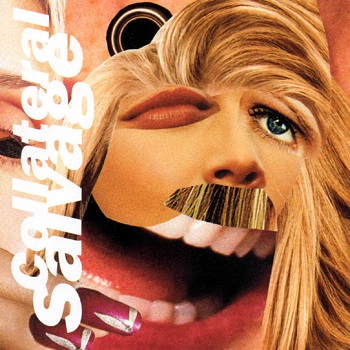
Also, on first listen, the new NE CD Collateral Salvage is excellent. Nice work with some beats, acoustic samples, etc. Also doesn’t follow the usual boshing or downbeat formulae of dance music. More on that soon.
throne of agony
Bizarre rant over at Agony Shorthand about reggae.
It seems to me that getting into dub and the more instrumental side of reggae is a common route for people who have previously been into punk or experimental music. But people often then move on to being interested primarily in the artists – the singers and players of instruments. This has been my experience and it’s something which seems to be shared with people who become reggae obsessives.
My guess is that this is partly because it’s easier to categorise (and therefore map) the vastness of reggae by holding onto a few names like Lee Perry, King Tubby, Coxsone etc rather than try to pick out the literally thousands of names which have ever been on the other side of the studio glass.
But, to dismiss the lyrical content of 70s roots as “the stuff they were prattling on about (Jah, weed, mystical Rastafarianism) was so goddamn bothersome and alien to the lives of so many non-Jamaican reggae listeners” seems unusually bigotted.
The music and lyrical content all emerged out of the experiences of people living in Jamaica in the 1970s, but you would have to be almost superhumanly retarded to not find value there if you live, oh I dunno, in Hackney in 2003.
And by this I don’t mean that everyone should embrace rastafarianism as a way of life – to me that is precisely missing the point of some of the more universalist aspects of reggae lyrics.
In fact, the removal of the lyrics from the equation makes me somewhat uneasy. It’s almost like people are saying “oh well of course it’s great to hear the music that those Jamaican chappies are making, I simply love to bounce about to their funky bass lines and ting. But you wouldn’t want to listen to what they have to say about the world”.
You ignore the message at your peril – there is far more there than a bit of creativity with bass and reverb.
Dig deeper.
death tv
After Matt’s ruminations on tWist (and follow-ups from Paul Meme, and the man Reynolds), it’s worth mentioning that he also has a blog. It ain’t about harcore, tho, fanbwoys.
gimme the horn
What is K-Punk ON about, eh? Lexicon of Love, Beauty Stab – top stuff! “Dr Mabuse” by Propaganda – top demonic chart action! “Into Battle with” and “Who’s Afraid of” The Art of Noise – top mentalist intellectual hardcore!
I’ll give YOU “empty, uninvolving, imposing”, you young whippersnapper!
Tho fair play on producing stadium atrocity merchants “Yes”.
flash. aaaaaaaaaaaaargh
I share Jim’s* reservations about the Flash Mob thing. It seems to me like they are “the Reclaim The Streets actions it’s OK to go on”. Had a brief text discussion with my sister about this and felt a bit frustrated about the whole thing.
It’s obviously a widespread desire to do something spontaneous, someting dangerous and chaotic in the heart of commodity-land. But the London incarnation of Flash Mobs just seems to act as a sort of representation of that, a safety valve, a new trendy thing to check out for a few weeks. Judging by the descriptions of the first one, it’s all very SAFE.
But also, it’s something outside of the activist community (and believe me, I am ALL IN FAVOUR of things being outside of “the activist community”). But… it therefore doesn’t have any interaction with the discussions about urban space, about surveillance, about psychogeography as a way of contesting an area’s supposed function.
It smacks of something which is already sewn up. The next marketing strategy / Sunday Supplement Feature / story board.
*(Joel Biroco also has a load of good stuff to say about this – his blog is linked from Jim’s)